
Scoped Research workspace
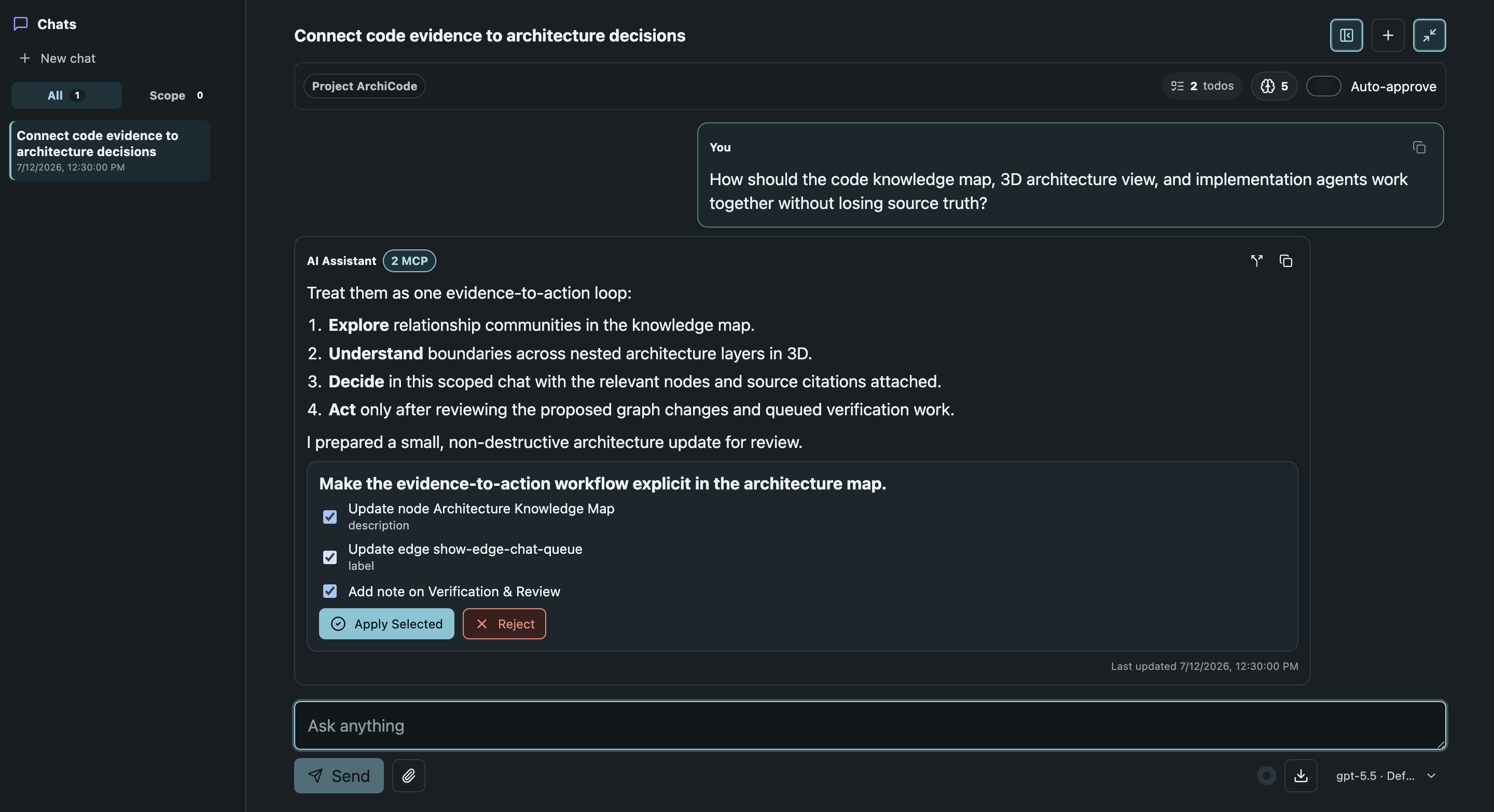
Reason at project, flow, subflow, or node scope using the graph, local files, images, documents, web research, durable memory, and specialist subagents.
Open source · AGPL-3.0 · macOS / Windows
ArchiCode is a local, graph-native software engineering harness for investigating, researching, planning, building, debugging, and evolving software with AI agents — with the graph as the shared realtime working contract connecting every decision, diff, and verification.
In the agentic era every team can generate more code than it can honestly review. The bottleneck isn't writing anymore — it's knowing what you have, why it's there, and whether you can still trust it.
Traditional IDEs are file-first and agent harnesses are chat-first. Neither gives you the durable big picture needed to supervise a large, continuously changing AI-built system.
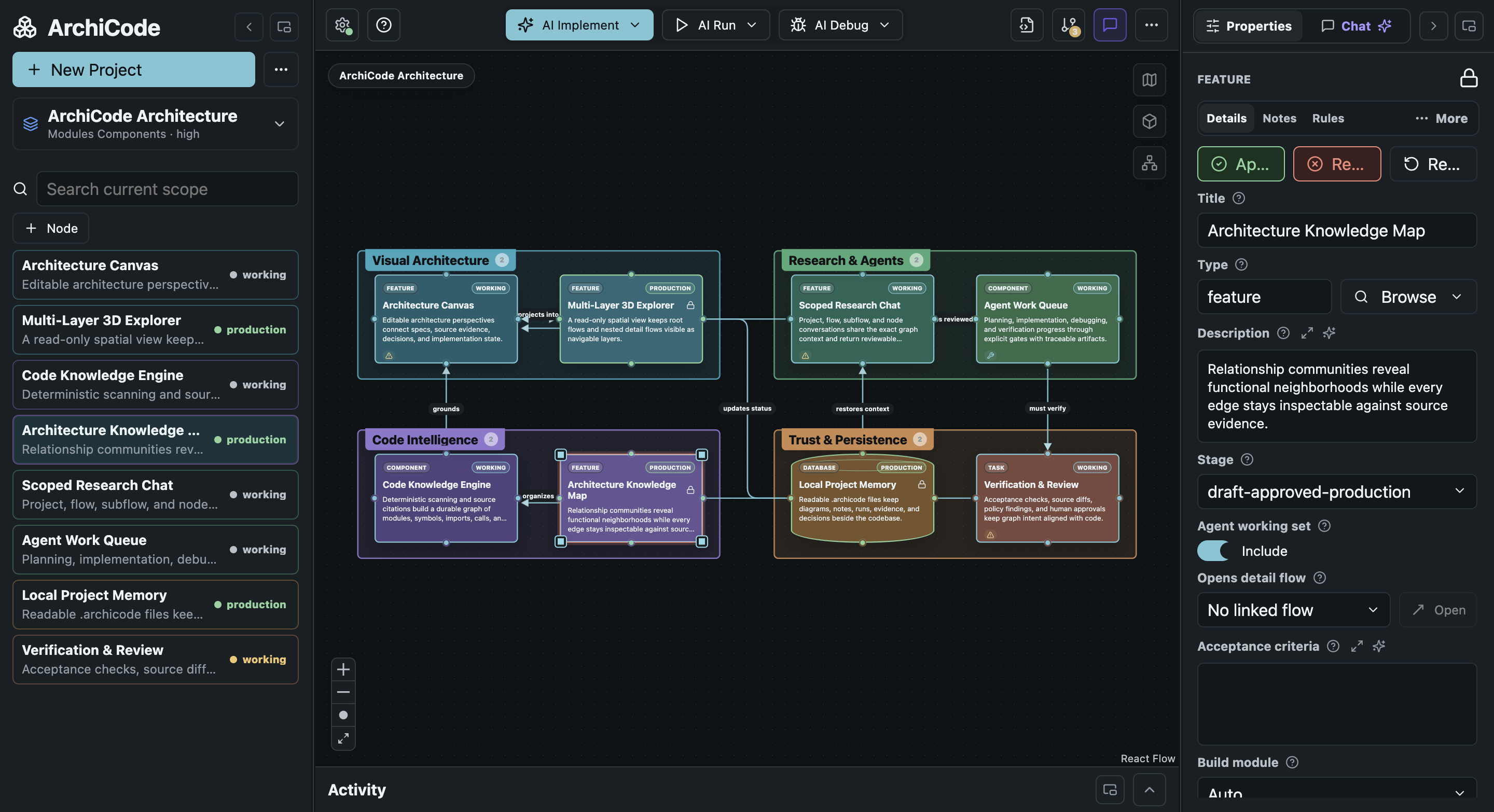
ArchiCode connects architecture, design flows, code evidence, decisions, implementation scope, and verification state in one observable workspace shared by engineers and agents.
ArchiCode doesn't wrap another tool's harness. Local coding CLIs and compatible APIs are interchangeable model sources — the persistent context, orchestration, observability, and human review are ArchiCode.
Move from a system-level view down to a source relationship — and follow every run, diff, test, failure, and approval back to the graph.
Start a project from scratch or import an existing codebase into evidence-backed architecture perspectives.
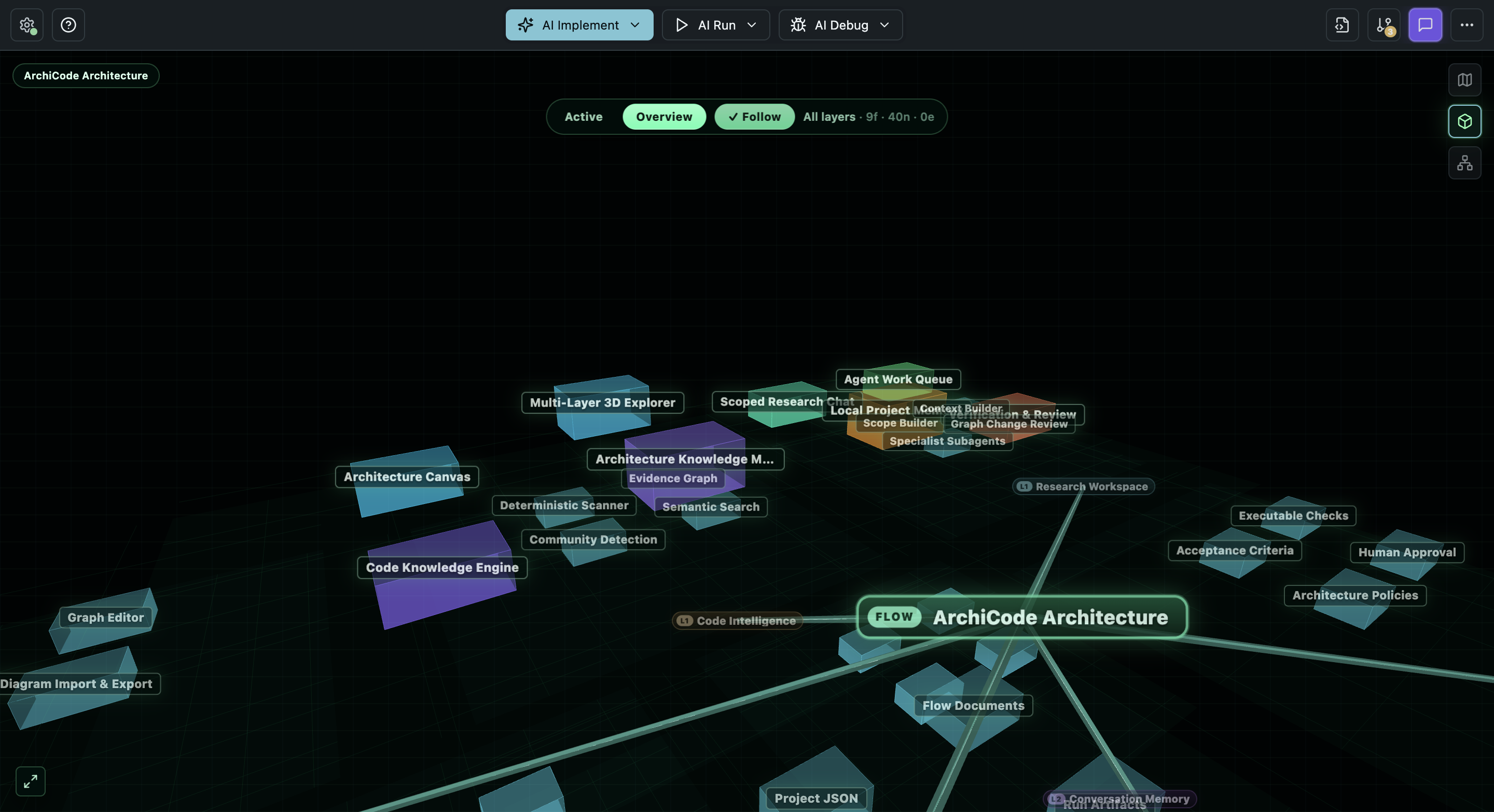
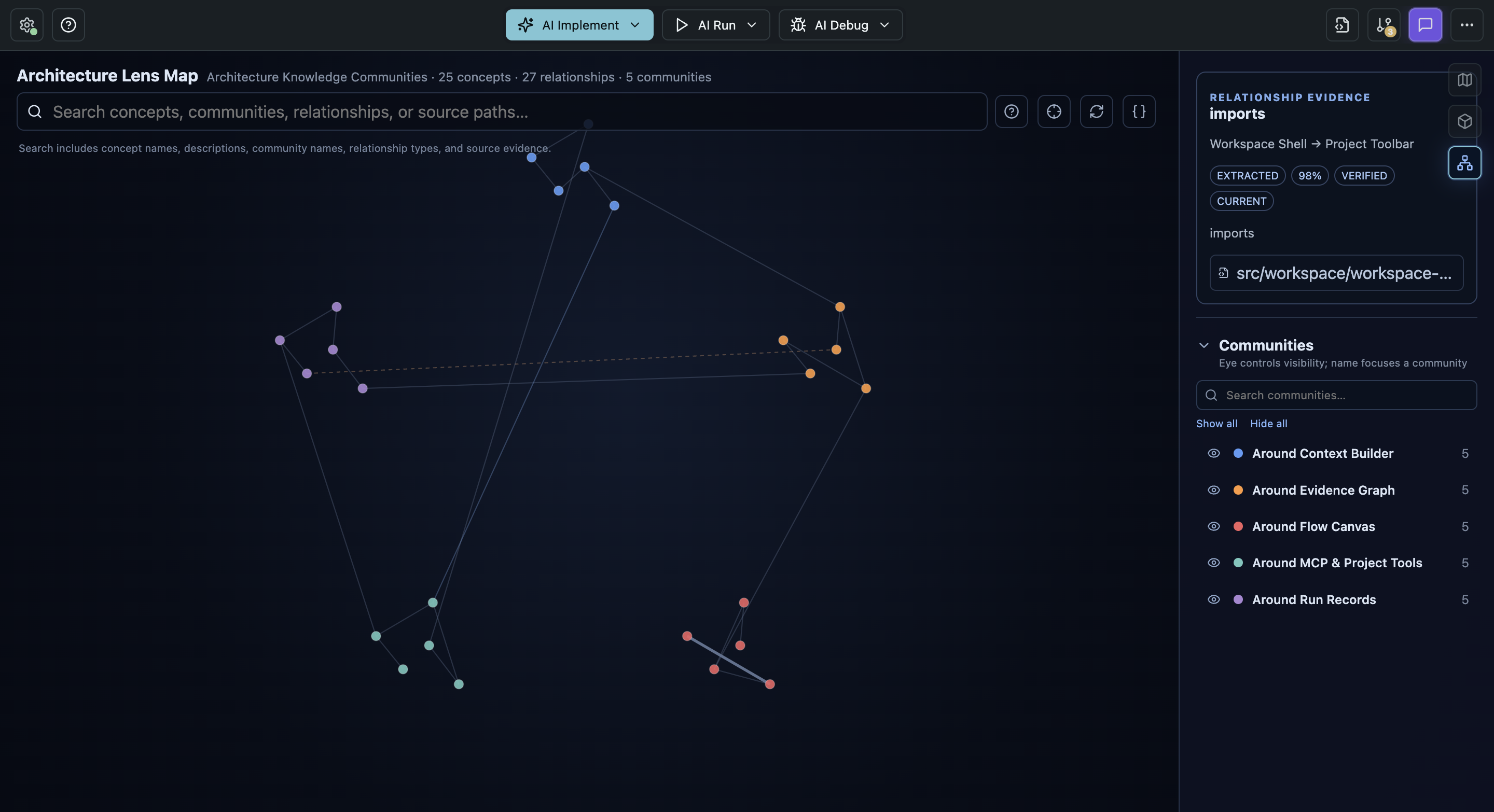
Model components, features, tasks, groups, dependencies, and nested detail flows on an editable architecture canvas.
Chat-first and code-first tools are great at producing change — and terrible at helping you live with it. ArchiCode gives you a place to stand: a truthful map of the system, and professional-grade control over everything the agents do to it.
Every node and edge traces back to real files, symbols, and calls — the graph can't quietly drift away from the code it describes.
Architecture diagrams are how engineers already think. ArchiCode keeps that language — but makes it live, versioned, and verifiable.
Plans, diffs, tests, failures, verification evidence, token spend — observable end to end, with human approval exactly where it matters.
Reason at project, flow, subflow, or node scope using the graph, local files, images, documents, web research, durable memory, and specialist subagents.
Converse through OpenAI Realtime, inspect bounded project context with read-only tools, and delegate longer work to visible background tasks.
Turn an approved direction into scoped planning, source changes, tests, debugging, verification, artifacts, and human review.
Keep architecture intent, implementation evidence, decisions, status, and acceptance checks in one shared model.
Inspect queues, plans, tool activity, traces, logs, diffs, failures, verification evidence, token usage, and review decisions.
Import an existing repository into architecture perspectives backed by real files, symbols, imports, calls, and source locations.
Model components, features, tasks, settings, groups, dependencies, and nested detail flows.
Navigate root flows and nested architecture layers without losing their spatial relationship.
Reconcile architecture after external edits using deterministic, affected-scope updates and auditable reports.
Attach executable criteria to architecture nodes and surface deterministic architecture-policy findings.
Use Codex, Claude Code, OpenCode, Google Antigravity, Grok Build, or Kimi Code locally; connect compatible APIs; and extend agents with project skills and MCP servers.
Browse files, inspect diffs, operate Git, run local services, debug failures, open the project in a chosen code IDE, and export diagrams or project data.
The same graph that keeps agents grounded keeps a team aligned. Architecture, decisions, and verification state become shared, versioned knowledge instead of tribal memory.
Architecture intent, decisions, status, and acceptance checks live in a model every engineer can see — not in one person's head or a private chat transcript.
Portable planning state under .archicode/ is readable and
versioned with the repo, so flows, decisions, and ledgers travel through
normal branches, reviews, and merges.
New teammates start from evidence-backed architecture maps and functional communities instead of spelunking through files to reconstruct the system.
Agent work lands as explicit proposals, diffs, tests, and verification evidence — so review decisions stay visible to the whole team, not siloed in someone's session.
ArchiCode is released under the GNU Affero General Public License v3
(AGPL-3.0-only). Use it, modify it, and distribute it —
subject to the AGPL's source-availability and network-use terms. A
separate commercial license is available for organizations that need
different terms, including closed-source distribution.
ArchiCode is built and funded independently. Sponsors help keep it that way — and can be featured here and in the app.
Requires Node.js 22.12+ and npm.
git clone https://github.com/roymasad/ArchiCode.git
cd ArchiCode
npm install
npm run dev
GitHub Releases provides signed macOS builds and unsigned Windows builds. For a signed Windows installation, get ArchiCode directly from the Microsoft Store.
Start a new project from the graph up, or import an existing codebase — get the eagle view and supervise AI-built change with confidence.